

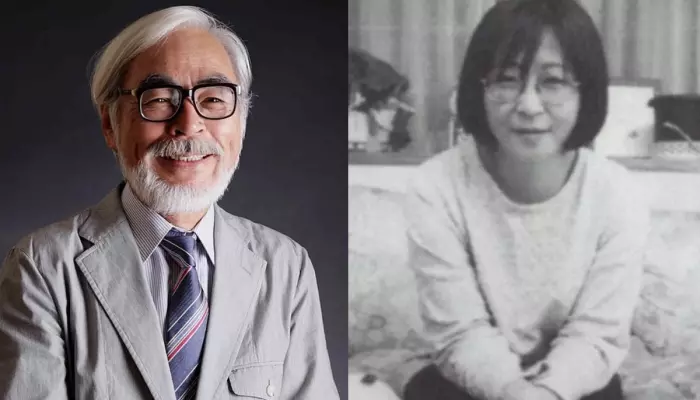
Most people who love Studio Ghibli films know Hayao Miyazaki’s name. Far fewer know the name of the animator he met at Toei Animation in 1965 — the woman who became his wife, his co-worker, and the quiet backbone of one of animation’s most influential families.
Her name is Akemi Ôta. She is a real, credited animator with a career that started before Studio Ghibli even existed. Yet outside of brief mentions in film credits and short biographical entries, she remains largely unknown to the general public.
This article covers who Akemi Ôta is, what she actually worked on, how she and Miyazaki met, her contributions to some of Ghibli’s most beloved films, and why someone with her career history is still so rarely talked about.
Who Akemi Ôta Is
Akemi Ôta was born in 1938. She is a Japanese animator who appears in film credits under two names — Akemi Ôta and Akemi Miyazaki — depending on the project and the time period.
Her role in animation was primarily as an in-between artist. This is one of the most essential jobs in traditional hand-drawn animation. In-between artists draw the frames that fall between the main poses created by senior animators. Without that work, movement looks choppy. Every smooth gesture in a classic animated film depends on people doing this job well.
She began her career at Toei Animation in 1958, one of Japan’s most important animation studios at the time. Her first project was The White Snake Enchantress, also known as The Tale of the White Serpent — considered one of Japan’s earliest feature-length animated films. She entered the industry at a time when it was heavily male-dominated, and her career quietly grew from there.
Akemi is not a public personality. Her name appears in credits, not in headlines. That distinction matters when understanding why so little has been written about her despite her real professional history.
How She and Hayao Miyazaki Met
Both Akemi and Hayao Miyazaki worked at Toei Animation during the late 1950s and 1960s. Their paths crossed professionally before they became a couple.
They are documented as having met while working on Gulliver’s Travels Beyond the Moon, a Toei animated feature produced in 1965. The film brought them together as colleagues on the same project — a fairly common way for creative relationships to form in studio-based industries.
They married in October 1965, the same year the film was made. Some secondary sources describe them as having become each other’s muses, which reflects how fans and commentators often frame their story. What is confirmed is simpler and arguably more interesting: two animators met at work, married, and went on to build both a family and a shared professional legacy.
Their origin story is not a fairy tale constructed after the fact. It started in a working animation studio, rooted in a shared craft.
Her Animation Credits and Work at Studio Ghibli
Akemi Ôta had a real filmography that spans more than a decade of active work. Her confirmed credits include:
- Gulliver’s Travels Beyond the Moon (1965)
- Horus: Prince of the Sun (1968)
- Animal Treasure Island (1971)
- Maken Liner 0011 Henshin Seyo! (1972)
These are not minor productions. Horus: Prince of the Sun in particular is considered a landmark in Japanese animation history, widely studied for its artistic ambition and its influence on animators who came after it.
Her work did not stop there. Akemi is also credited as part of the animation staff on two Studio Ghibli-era productions:
- Nausicaä of the Valley of the Wind (1984)
- My Neighbor Totoro (1988)
She was not a director or producer on these films. Her role was as part of the broader animation team. But if you pull up the credits for either of those films, her name is there. That is not a trivial thing. My Neighbor Totoro is one of the most beloved animated films ever made, and she contributed to it directly.
Most of the work animators do is invisible to casual audiences. People see the finished film. They rarely think about the dozens or hundreds of people who drew individual frames to bring it to life. Akemi Ôta’s career is a clear example of how much talent operates quietly behind a finished production.
More recently, a 2018 Studio Ghibli-related book called Totoro no Umareta Tokoro (The Place Where Totoro Was Born) included artwork by Akemi. The book focused on Sayama Hills, the real-world forest environment that inspired My Neighbor Totoro. Her contribution to it shows she has remained artistically active, even if not in a public-facing capacity.
Her Role in the Miyazaki Household and Family Life
Akemi and Hayao Miyazaki have two sons: Gorō Miyazaki and Keisuke Miyazaki.
Gorō is the more publicly known of the two. He followed his father into animation and became a director at Studio Ghibli. His credits include Tales from Earthsea (2006), From Up on Poppy Hill (2011), and Earwig and the Witch (2020). His relationship with his father’s legacy has been discussed openly in interviews — working under the shadow of Hayao Miyazaki came with obvious pressures.
Keisuke Miyazaki, the younger son, lives a more private life and is not involved in animation. According to some biographical sources, he works in the automotive industry, though detailed public information about him is limited.
What is known about Akemi’s parenting role comes from a comment attributed to Hayao Miyazaki himself. A profile on him noted that Akemi “would often do the things that fathers normally do” — suggesting she carried a significant share of hands-on parenting while he focused on his demanding work in animation.
This is not an uncommon dynamic in households where one partner has an intensely time-consuming career. Miyazaki’s own statements point to Akemi taking on a larger parenting role than might be expected, and that contribution — though less visible than film credits — was real and significant.
Why So Little Is Known About Her
Akemi Ôta’s low public profile is not an accident or a mystery. It reflects something true of many people who work in behind-the-scenes creative roles, especially women in mid-20th-century Japan.
When she joined Toei Animation in 1958 as an in-between artist, she was entering a field that was mostly male. Women who worked in animation during that era often did foundational work without receiving much outside recognition. The industry’s public face was usually the directors and producers — almost always men.
Akemi’s career follows that pattern. She worked on significant films. Her name is in real credits. But she was never a director, never gave major interviews, and never positioned herself as a public figure. The result is that most of what is written about her comes as a footnote in biographical pieces about Hayao Miyazaki, not as coverage in her own right.
This is worth acknowledging honestly. There is genuine historical interest in early female animators in Japan, and Akemi Ôta is a documented part of that history. The gap in public information is not because her work was unimportant — it is because the industry and media of that time rarely spotlighted people in her position.
For readers who want to explore the broader world of animation careers, business, and the entertainment industry, Upmarketbiz covers topics that connect professional history with modern creative industries.
The Miyazaki Family as an Intergenerational Story
Hayao Miyazaki co-founded Studio Ghibli in 1985 and went on to direct some of the most acclaimed animated films ever made. Spirited Away won the Academy Award for Best Animated Feature. Films like Princess Mononoke, Howl’s Moving Castle, and Nausicaä of the Valley of the Wind are studied in film schools around the world.
But none of that career happened in isolation. Akemi Ôta was there from the beginning — first as a colleague, then as a wife, then as the parent who kept things running at home while Miyazaki’s professional demands grew. And she contributed directly to the films themselves, listed in the credits of productions that are now considered classics.
The family story has a clear shape: two animators meet at Toei Animation, build a life together, raise two sons, and one of those sons eventually becomes a director at the studio his father helped create. That is not a small thing.
Akemi Ôta sits at the center of that story, even if she rarely appears at the front of it.
Final Thoughts
Akemi Ôta is not a household name. She has never sought celebrity, and very little personal information about her is in the public record. What is documented, though, is enough to understand her clearly.
She was a working animator who started her career in 1958. She contributed to significant Japanese animated films across multiple decades.
Read Also:
